You Paid $4,000 to Almost Die: The Curated Danger Economy Is Thriving
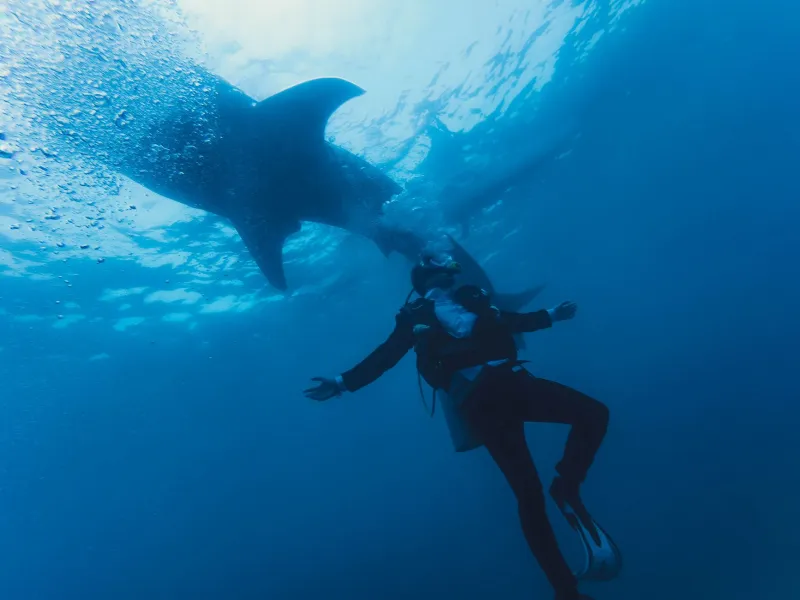
Somewhere off the coast of the Outer Banks right now, a marketing executive in a wetsuit is watching a great white swim toward a steel cage full of tourists who paid more for that weekend than most people spend on a flight to Europe. Everyone's smiling. Everyone's filming. Nobody's asking the obvious question: when did danger become a luxury good?
Welcome to the danger vacation, America's fastest-growing answer to the all-inclusive resort. The brochure says 'unforgettable.' The waiver says 'irreversible.'
Boredom Is the Real Adrenaline Junkie
Here's the uncomfortable theory: we didn't get braver. We got bored. Two decades of optimized comfort — climate control, curated feeds, same-day delivery — have made the average American vacation feel like a change of scenery, not a change of state. You can drink a mai tai in Punta Cana and still be answering Slack by the pool.
Thrill tourism promises something the resort can't: the genuine possibility that things could go wrong. That's the product. Not the shark. Not the storm. The possibility.
Psychologists have a name for part of this — the 'benign danger' rush, the sweet spot where your amygdala screams but your rational brain knows you're statistically fine. Adventure tour operators have essentially industrialized that sweet spot. They've productized the feeling of being alive and priced it like a car payment.
And business is booming. The adventure tourism market has ballooned into a multi-hundred-billion-dollar global industry, and the US segment — storm chasing tours through Tornado Alley, free diving retreats in Florida, 'solo survival' experiences in the Rockies — is growing faster than almost any travel category. When the economy wobbles, people don't stop spending on experiences. They just want the experiences to punch back.
Meet the Merchants of Near-Death
The people selling curated danger aren't mustache-twirling daredevils. They're often ex-military, ex-competitive athletes, or — more often — excellent marketers who hired someone with real credentials. The modern danger tour is a masterclass in risk theater: enough genuine hazard to flood your system with adrenaline, wrapped in enough safety protocol to keep the insurance carrier from having a stroke.
Storm chasing tours in Oklahoma and Kansas are the perfect case study. You're paying $3,500 a seat to ride a heavily modified suburban toward a rotating supercell, guided by a meteorologist who knows — with a precision he will never fully share — exactly how close is too close. The danger is real. The distance from danger is engineered. You're buying the edge of the map, not the map.
Same with cage diving. The cage, the protocols, the spotter, the second boat — it's a system designed to make you feel like prey while ensuring you never actually become it. The shark is the marketing. The engineering is the business.
The Fine Print Reads Like a Eulogy
Now for the part the Instagram reel doesn't show you. Every one of these trips runs on a legal architecture most participants never read: liability waivers that can be shockingly broad, arbitration clauses that strip your right to a jury, and release language covering everything from 'known and unknown risks' to 'death.'
Courts don't always enforce these documents — waivers can't always excuse gross negligence — but you don't want to be the test case. If something goes sideways on a guided wilderness trip in Colorado or a dive charter off California, your family's first encounter with the fine print will happen at the worst possible moment.
And there's a subtler cost: the commodification of courage itself. When bravery becomes a purchase, we start grading ourselves by receipts. 'I did the cage dive' becomes a personality trait, a LinkedIn-adjacent flex. The experience economy has figured out that identity is more monetizable than relaxation. You don't come home from a danger vacation rested. You come home branded.
The Honest Version of the Thrill
Look, none of this is a call to stay on the couch. Calculated risk is one of the great textures of a life, and there are far worse ways to spend money than feeling genuinely small in front of a storm or a shark.
But be honest about what you're buying. You're not buying danger — you're buying a simulation of it, engineered by professionals, priced for the comfort class. The real thing doesn't come with a waiver or a photographer. The curated version comes with both, and charges you extra for the GoPro footage.
So book the trip. Chase the storm. Get in the water. Just know that the most daring thing in the whole transaction isn't the shark.
It's signing your name at the bottom of page four without reading it.