The Empty Calendar Economy: How Doing Nothing Became America's Priciest Status Symbol
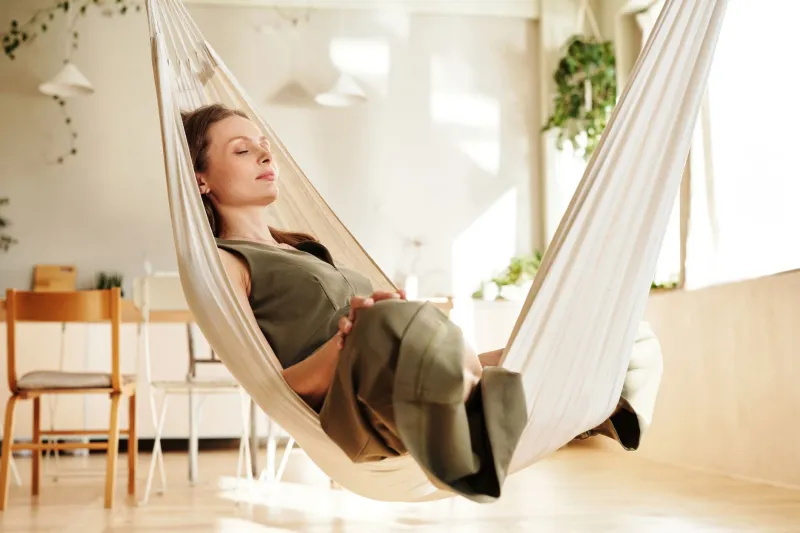
There's a certain kind of person in Los Angeles right now who will tell you — unprompted, over a $14 matcha — that they've "stopped being busy." They say it the way people used to announce a promotion. Relaxed shoulders. Slow blink. The whole performance of a person who has absolutely nowhere to be.
What they're really telling you is that they can afford to do nothing. And in 2025, that might be the most expensive sentence in America.
Busy Was the Old Flex
For about two decades, exhaustion was the unofficial uniform of the American striver. You answered emails at midnight. You bragged about 4 a.m. alarms. You wore your Google Calendar like a war medal — every square filled, every gap a moral failing.
That era is dead, and honestly, good riddance. But what replaced it isn't freedom. It's a new hierarchy with the same old problem: somebody's always losing.
Because here's the thing about leisure — real, unstructured, gloriously boring leisure — it requires the one resource most Americans don't have: slack in the system. Time you don't have to justify. Afternoons that belong to nobody.
The Boredom Coach Will See You Now
Yes, this is a real job now. Executive coaches — some charging rates that would cover a car payment — are being hired to teach high-powered professionals how to sit still. Not meditate, exactly. Not optimize. Just... be unremarkable for an hour without reaching for a phone.
The irony writes itself: we've professionalized idleness. We've built a curriculum for the one activity that's supposed to require no effort. And the people buying it aren't trying to relax. They're trying to acquire the appearance of relaxation, the way you'd acquire a watch or a zip code.
Meanwhile, on the other end of the feed, "slow living" influencers film themselves baking sourdough in renovated farmhouses, framing stillness as a lifestyle choice rather than what it usually is — a financial position. Nobody with three jobs and a two-hour commute is romanticizing their Tuesday. They're surviving it.
When Free Time Became a Luxury Good
Economists have a blunt way of putting it: free time is a normal good, and like most normal goods in America, it's been steadily flowing uphill. The well-off are working less than they used to; the middle and working class are cobbling together hours across gig apps and second shifts. The empty Saturday isn't evenly distributed. It never was — but now we've stopped pretending otherwise.
So the calendar became a class marker. A full one signals necessity. An empty one signals leverage. You didn't cancel your weekend plans because you're flaky — you never made any, because you don't have to perform availability for anyone.
That's the quiet flex nobody says out loud at dinner: "I have nowhere to be and no one to answer to."
The Bootleg Version
And of course, where there's demand, there's counterfeiting. People are faking it. They book fake appointments so they can claim they were "unreachable." They post photos of hammocks they visited for eleven minutes. They romanticize a slow morning on Instagram between Slack pings.
It's boredom as performance — the bootleg version, sold at full price. And like most counterfeits, it fools no one who matters. Actual idle time can't be documented in real time. The moment you capture it, you've spent it.
What Your Dead Tuesday Afternoon Is Actually Worth
Here's the take nobody puts on a mug: an unremarkable afternoon — the kind you'd normally apologize for — might be the most radical thing you own. No monetization. No content strategy. No one auditing how you spent it.
The culture spent twenty years convincing you that every hour needed to produce something. It lied. The blank space in your week isn't wasted time. It's the last uncolonized territory in your life, and everyone from your boss to the algorithm has an interest in making you feel guilty about it.
So the next time you find yourself with nothing to do and nothing to show for it — don't fill the gap, don't post it, don't turn it into a personality. Just be bored. Quietly, badly, unprofitably.
In this economy, that's the boldest move left.