Silence Sold Separately: How Sitting Still Became a Five-Figure Flex
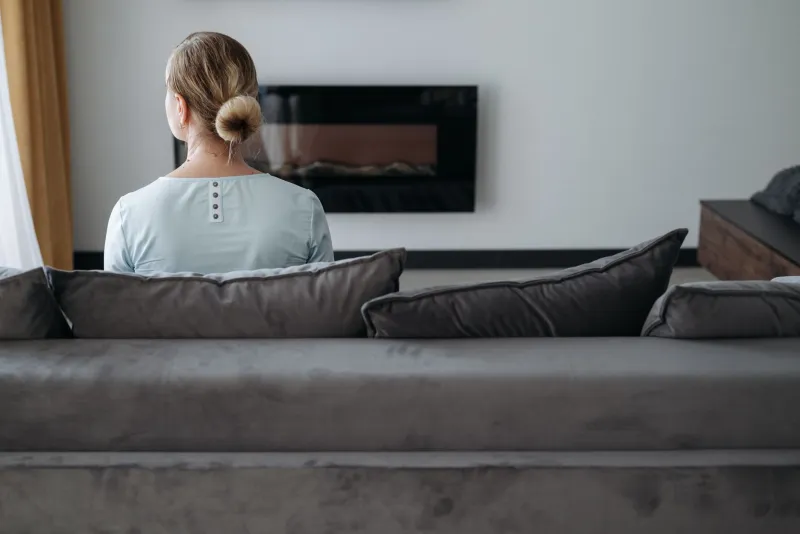
There's a resort in Northern California where guests pay $2,800 a night to not have Wi-Fi. No phones. No laptops. No agenda. You sit by a fireplace, you look at trees, and you're encouraged to let your mind wander. That's it. That's the product.
And it's sold out through next year.
Welcome to the boredom economy, where doing absolutely nothing is the most exclusive experience money can buy — and the rest of us are stuck paying for a subscription to a thing our grandparents did on a porch for free.
Laziness Got a Makeover
For most of American history, sitting around with nothing to do was a moral failing. Idle hands, devil's workshop, all that. Your grandmother didn't "practice stillness." She just sat on the porch with a cup of coffee and stared at the street, and nobody wrote a think piece about it.
Then something flipped. Somewhere between the smartphone colonization of every waking moment and the burnout epidemic that followed, staring at nothing stopped looking like laziness and started looking like discipline. Now the same behavior that would've gotten you scolded in 1995 costs more per night than a mortgage payment.
The wellness industry didn't invent this — it just found a way to invoice it. Slow living retreats in the Catskills. Digital detox compounds in the desert outside Joshua Tree. And yes, actual boredom coaches, who charge $300 an hour to teach executives how to tolerate an unstimulated mind. One coach I read about describes her job as "rehab for dopamine." She's not wrong. She's also not cheap.
The Rich Found the Last Scarce Thing
Here's the uncomfortable truth: attention used to be the cheap resource and money was the expensive one. Now it's inverted. Anyone can afford a streaming subscription, an endless scroll, a delivery app. What the wealthy can't buy at the mall is a quiet mind — so they're buying the infrastructure for one.
This is how luxury always works. It follows scarcity. When food became abundant, the rich started paying for hunger (see: fasting retreats, juice cleanses). When space became abundant in the suburbs, they moved back downtown and paid a premium for walkability. Now that stimulation is infinite and free, the flex is opting out — and opting out has a cover charge.
The cruelest part? The people who most need a break from the grind are the ones least able to afford it. The gig worker juggling three apps can't book a $4,000 stillness retreat. They get the stimulation whether they want it or not. The executive gets sold the antidote at retail price.
We're Paying to Escape a Problem We Bought Into
Let's be honest about the sequencing here. Nobody forced us to carry a casino in our pocket. We downloaded the slot machines, we opted into the notifications, and then — when it all became unbearable — an entire industry emerged to sell us relief. We broke it, and now we're renting it back.
That's the genius move of the boredom economy. It doesn't sell you an experience. It sells you the temporary absence of an experience you already regret having. It's like an arsonist selling fire extinguishers door to door.
And make no mistake, the retreats and coaches are the premium tier. The mass-market version is already here: paid meditation apps, "dopamine detox" courses, off-grid cabin rentals on Airbnb that market disconnection as an amenity. The porch stare has been productized at every price point.
What Nobody at the Retreat Will Tell You
Here's my actual take: the retreat isn't the point, and it never was. The wealthy people paying $2,800 to sit by a fireplace aren't buying stillness — they're buying permission. Permission to stop, sanctioned by someone else, with a receipt that makes it legitimate. They've outsourced the decision to rest to a vendor, because in a culture that treats exhaustion as a personality trait, you apparently need documentation to justify doing nothing.
But permission is free. It always was. You can close the laptop. You can leave the phone in the drawer and stare at your ceiling like a teenager in 1987. Nobody can stop you. The only thing the retreat adds is a story you can tell at dinner parties — which, in this economy, might be the real product anyway.
So sure, roll your eyes at the boredom coaches. But then do the harder thing: give yourself the stillness without the invoice. Because the moment we accept that peace of mind is a luxury good, we've let someone convince us that our own attention is theirs to sell back to us.
It isn't. It never was. Sit down. Stare out the window. That's the whole secret, and it costs exactly nothing.